
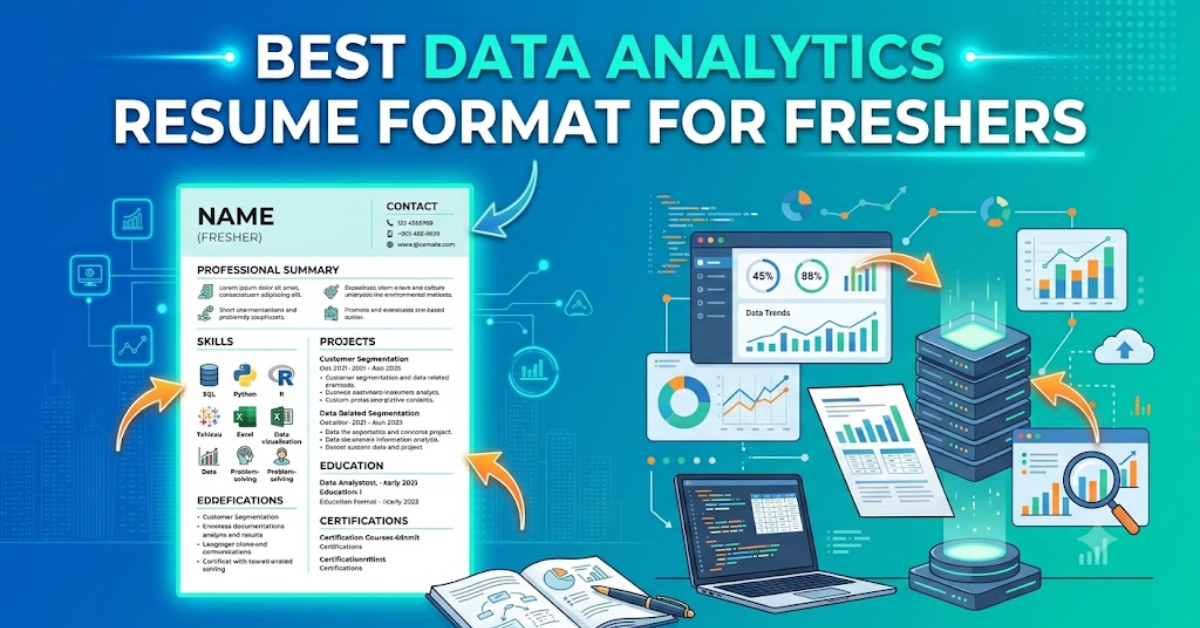
Recruiters evaluate candidates based on practical technical skills rather than simply listing software names. Your resume should clearly demonstrate proficiency in programming, data visualization, business intelligence, statistical analysis, reporting, and database management. Organizing your skills into categories also improves readability and ATS compatibility.
Python • R Programming • SQL • NumPy • Pandas • Data Structures • Jupyter Notebook • Basic Automation
Power BI • Tableau • Excel Dashboards • KPI Reports • Charts • Interactive Dashboards • Storytelling
MySQL • PostgreSQL • SQL Queries • Joins • Views • Database Design • Data Extraction
Data Cleaning • Data Wrangling • Statistics • Predictive Analysis • Trend Analysis • Business Insights
Projects prove your practical understanding of data analytics tools. Recruiters often spend more time reviewing projects than academic scores because they demonstrate your ability to solve real-world business problems.
Created an interactive Power BI dashboard that visualized monthly revenue, profit margins, regional sales performance, and customer trends using dynamic filters and KPIs.
Analyzed customer behavior using Python, Pandas, SQL, and Excel to identify churn patterns and recommend strategies for improving customer retention.
Designed dashboards showing employee attrition, departmental performance, attendance trends, salary analysis, and workforce demographics.
Certifications validate your technical knowledge and demonstrate continuous learning. They are especially valuable for freshers who have limited industry experience.
Avoid lengthy paragraphs. Keep your resume concise and highlight only relevant information.
Freshers should always include academic or personal projects to demonstrate practical knowledge.
Use industry-specific keywords such as SQL, Python, Power BI, Tableau, Excel, and Data Visualization.
A strong Data Analytics resume is the first step toward building a successful career in today's data-driven world. Fresh graduates should focus on demonstrating analytical thinking, technical expertise, project experience, certifications, and business problem-solving skills instead of simply listing educational qualifications. Keep your resume ATS-friendly, maintain a clean layout, quantify your achievements wherever possible, and regularly update your technical skills as new tools and technologies emerge.
By following this resume format, you can confidently present yourself as a capable Data Analytics professional and improve your chances of securing interviews for entry-level roles in analytics, business intelligence, reporting, and data-driven decision-making.
Looking to expand your skills beyond SEO? Explore our professional training programs: Data Analytics Training | HR Training | SEO Training